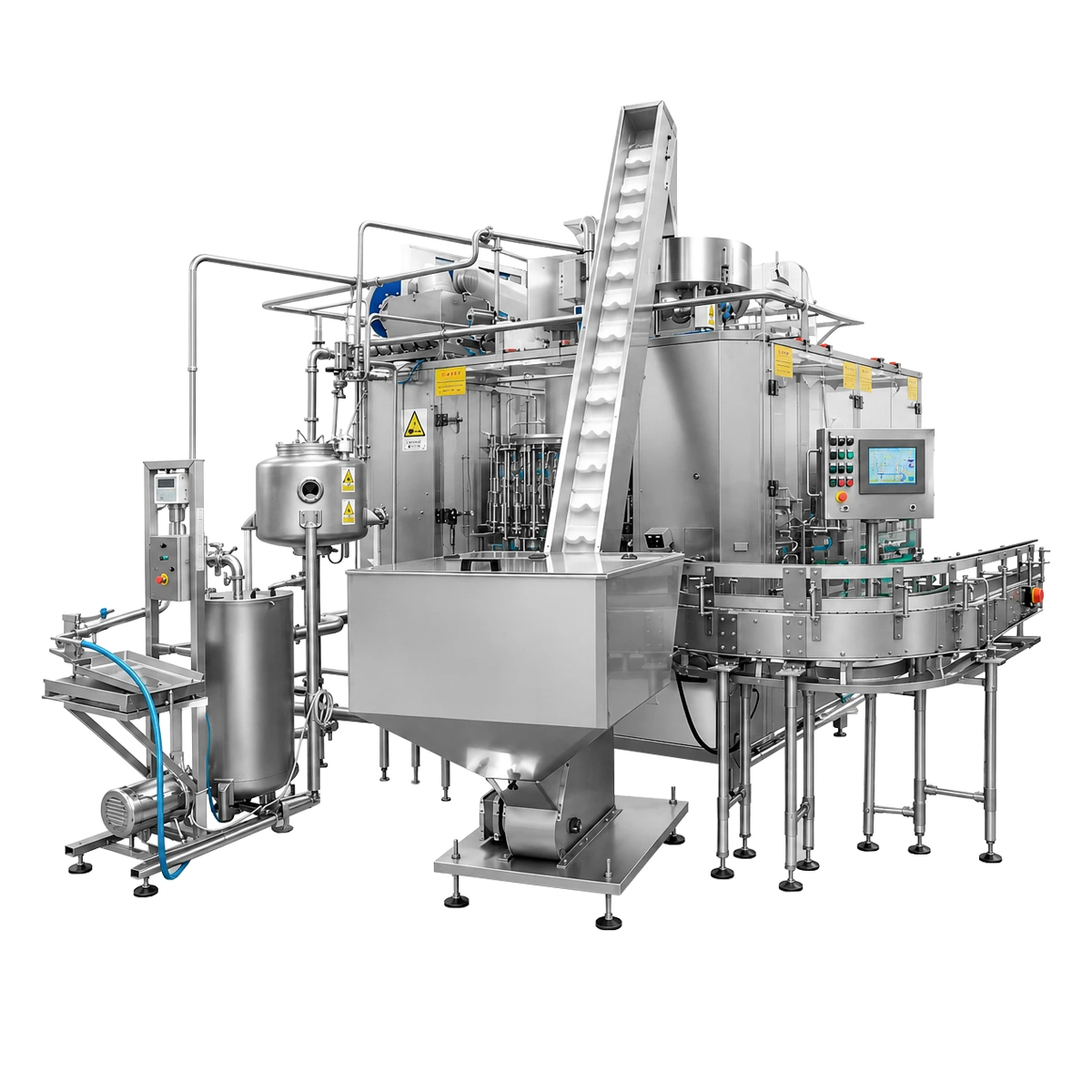

Bottle Filling Monobloc for a Juice Factory in Gambia
One of our long-standing partners, a dairy and juice processing specialist, approached us for a reliable and hygienic solution to fill fresh mango juice…

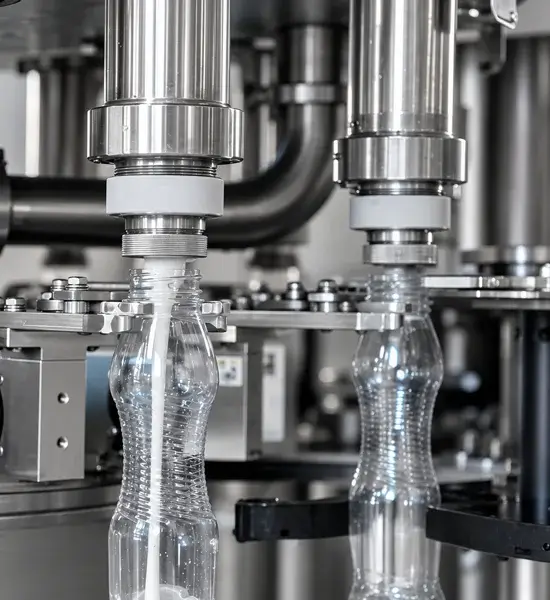
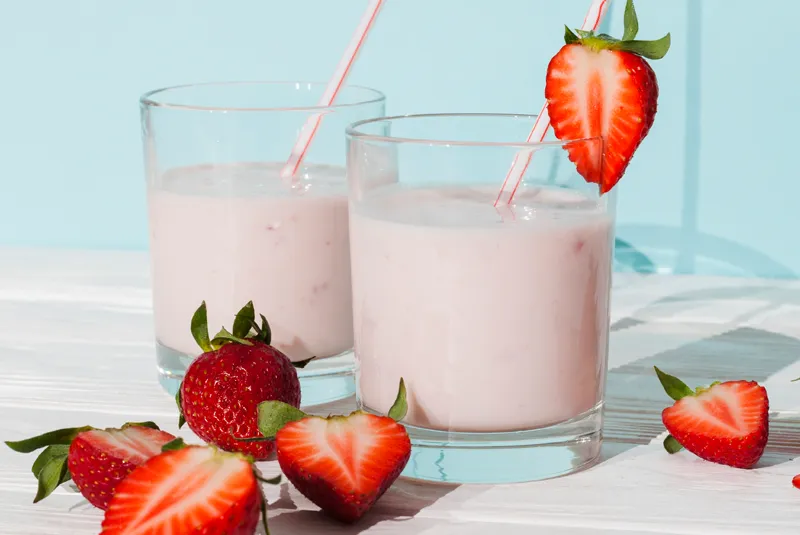
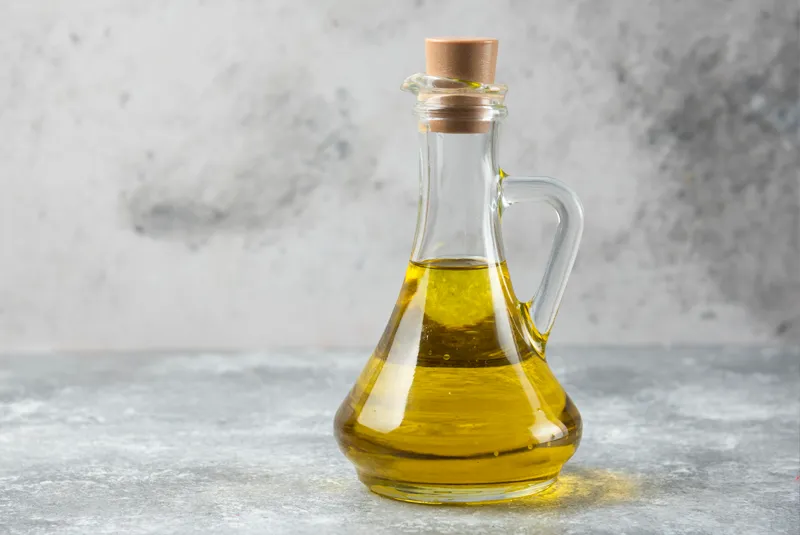
Bottle filling machines fill liquid and viscous food and beverage products into pre-made plastic and glass bottles. Typical applications include milk, drinking yoghurt, juices, edible oils and sauces, where consistent filling accuracy and reliable production are required.
Production requirements and product characteristics determine the machine configuration. Semi-automatic bottle fillers suit product development, small production batches and new product launches, while automatic linear machines are designed for continuous production. Monobloc systems combine bottle rinsing, filling and capping in a single machine, making them a practical choice for compact layouts and higher production rates. The filling technology is then selected according to the product, bottle type and filling requirements.
Filling Experts supplies bottle filling machines for PET, HDPE, PP and glass bottles. Our portfolio includes semi-automatic bottle fillers, automatic linear filling machines and monobloc filling systems, which can be integrated with bottle rinsing, capping, labelling and end-of-line equipment to build complete bottling lines.
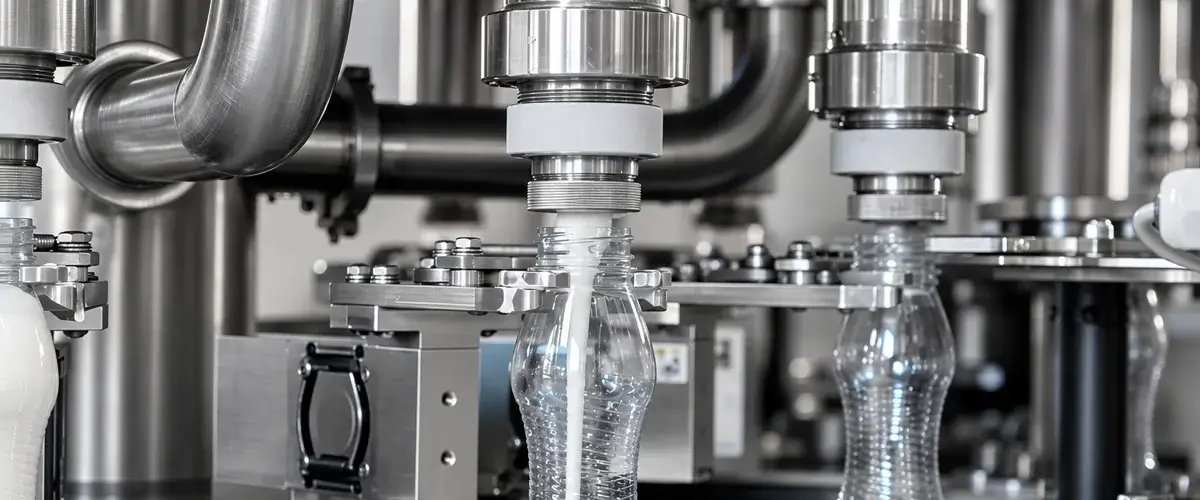
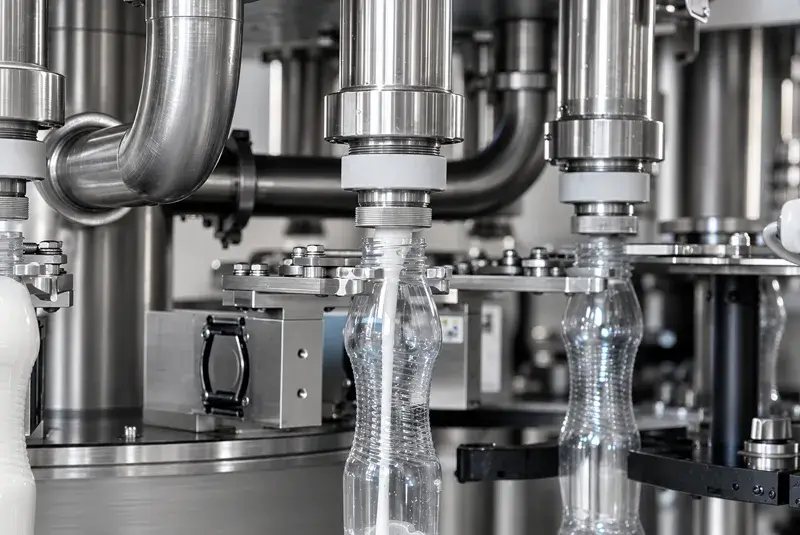
Bottle filling machines fill liquid and viscous food and beverage products into pre-made plastic and glass bottles. Typical applications include milk, drinking yoghurt, juices, edible oils and sauces, where consistent filling accuracy and reliable production are required.
Production requirements and product characteristics determine the machine configuration. Semi-automatic bottle fillers suit product development, small production batches and new product launches, while automatic linear machines are designed for continuous production. Monobloc systems combine bottle rinsing, filling and capping in a single machine, making them a practical choice for compact layouts and higher production rates. The filling technology is then selected according to the product, bottle type and filling requirements.
Filling Experts supplies bottle filling machines for PET, HDPE, PP and glass bottles. Our portfolio includes semi-automatic bottle fillers, automatic linear filling machines and monobloc filling systems, which can be integrated with bottle rinsing, capping, labelling and end-of-line equipment to build complete bottling lines.
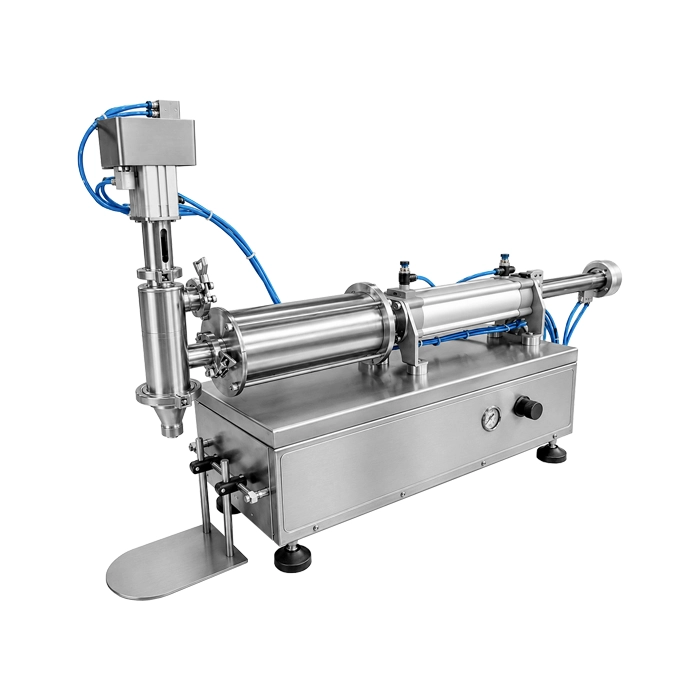
Semi-automatic bottle fillers suit artisan manufacturers, start-ups, farms and businesses introducing new products or bottle formats. They are also well suited to product development, market testing and small production batches, where flexibility is more important than production speed.
Unlike fully automatic systems, bottles are manually loaded and removed by the operator. This limits production capacity and increases labour requirements but allows manufacturers to start production with a lower initial investment. Semi-automatic machines also provide a practical solution where products are changed frequently or production volumes do not justify a fully automated bottling line.
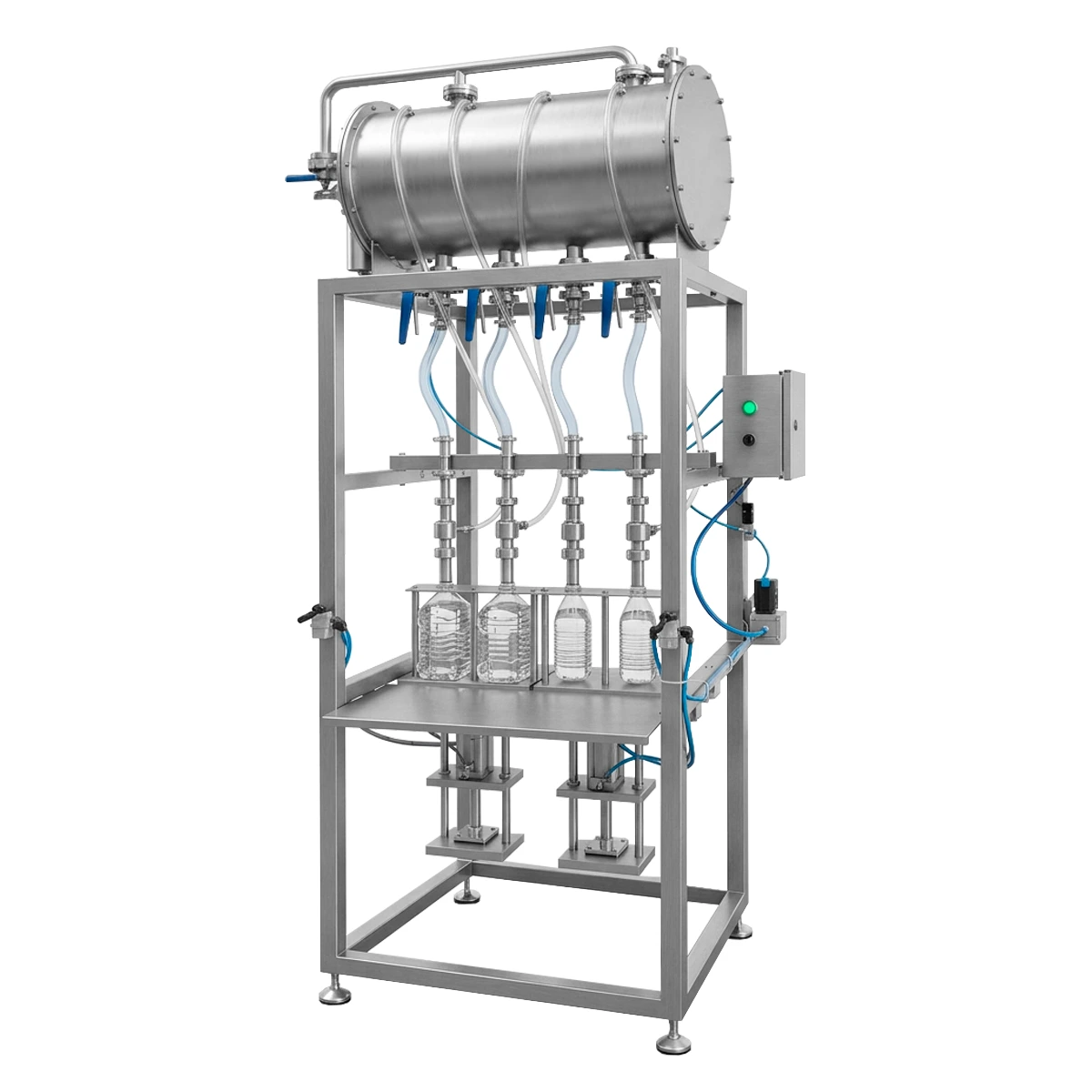
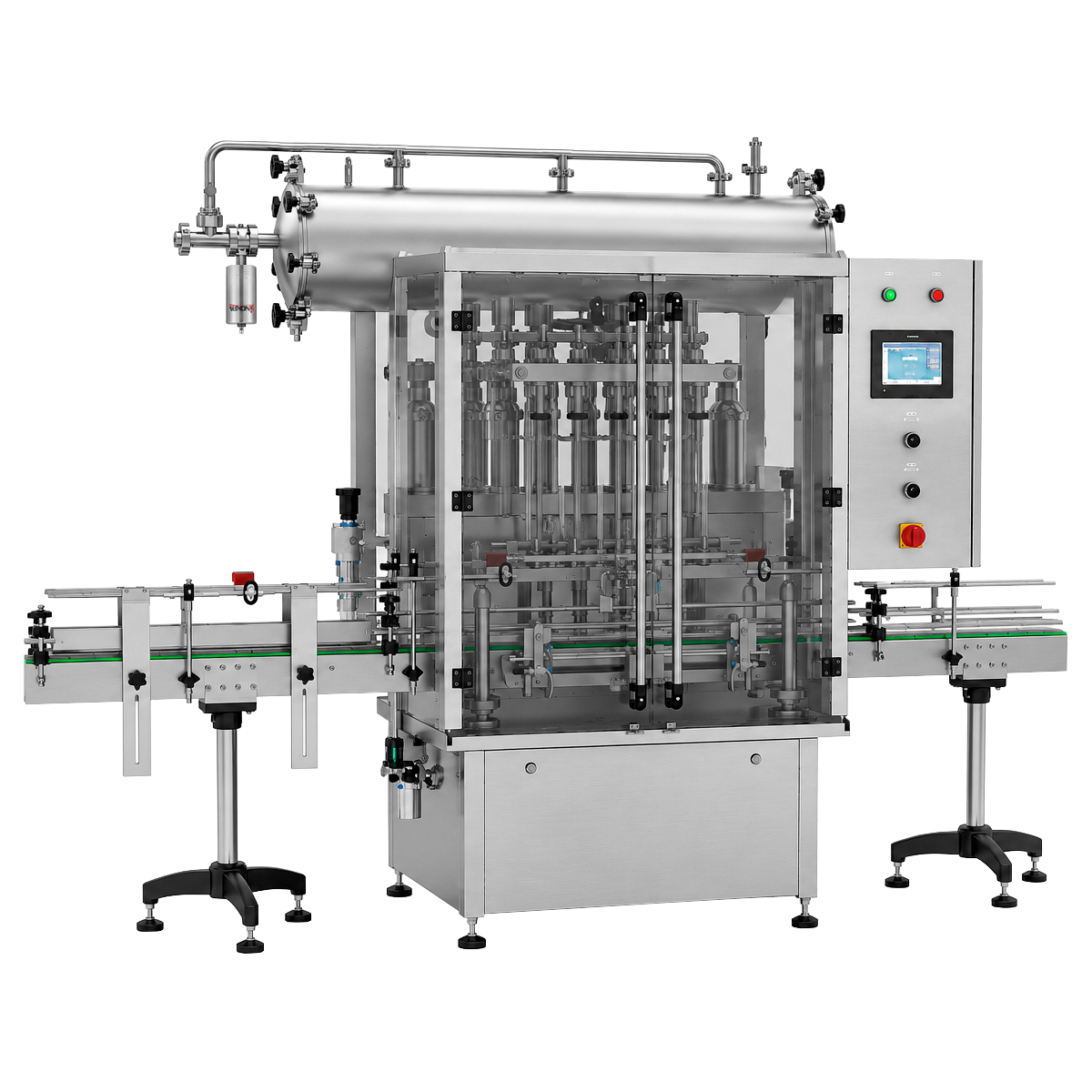
Automatic linear bottle filling machines are the most common solution for food and beverage production, combining higher throughput with a straightforward machine design. Different numbers of filling heads allow the machine to match current production requirements while providing capacity for future expansion.
One of the main advantages of a linear machine is its ability to integrate with existing production equipment. Bottle fillers, cappers, labellers and other machines are connected by conveyors, making it possible to upgrade individual parts of the line without replacing the complete system. Compared with semi-automatic machines, automatic linear fillers also improve hygiene, reduce manual bottle handling and minimise operator intervention throughout the filling process.
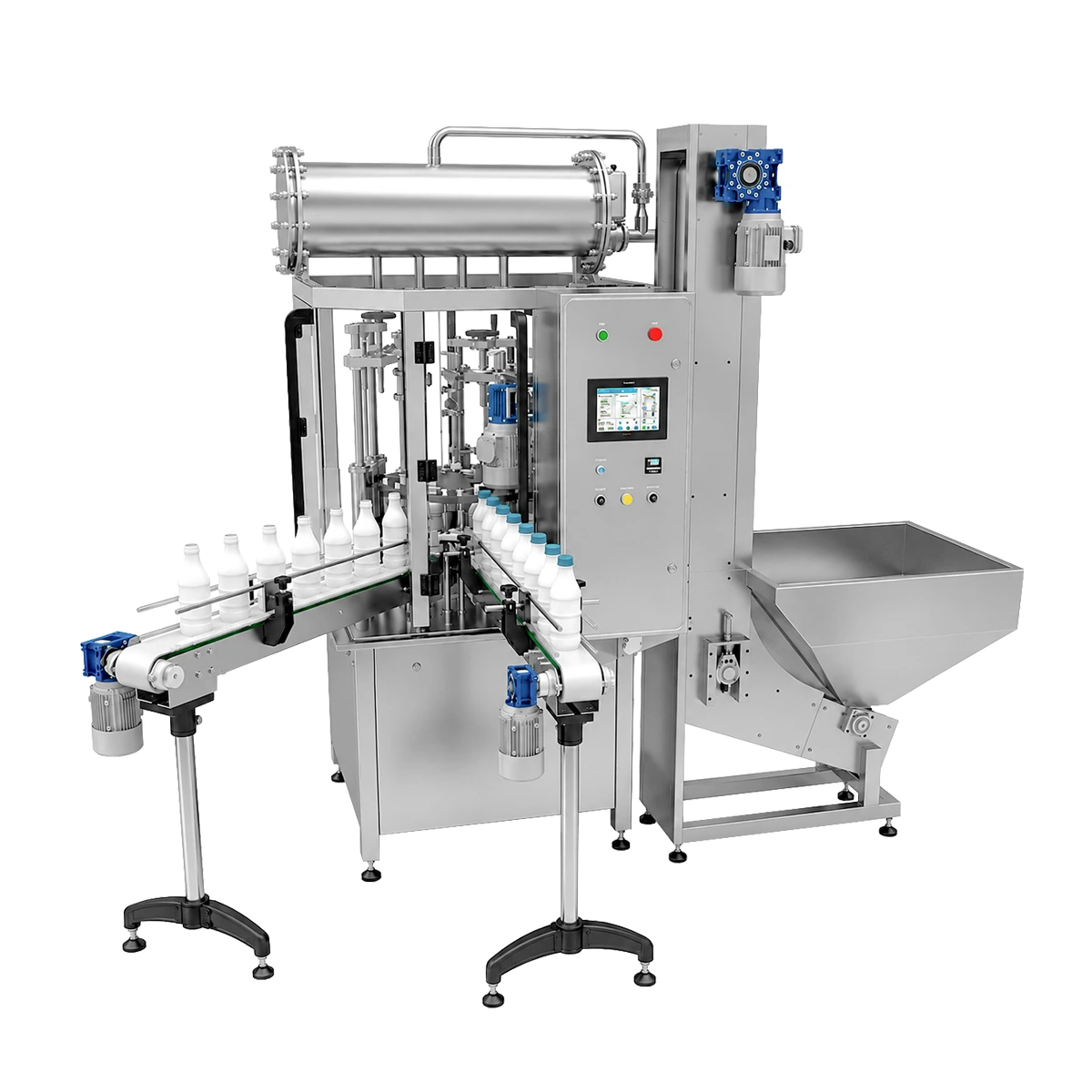
Monobloc filling systems combine bottle rinsing, filling and capping within a single machine. This configuration reduces the overall footprint compared with separate machines connected by conveyors and is often selected where available floor space is limited or where an integrated bottling system is preferred.
Monobloc systems are also widely used for higher production rates. While linear bottle filling machines are generally built with a limited number of filling stations, rotary monobloc systems can accommodate significantly more filling valves, making them better suited to high-speed bottling applications. They also support advanced hygienic machine designs, including Ultra Clean & Aseptic configurations where required. Although monobloc systems offer clear advantages in many applications, separate machines remain a practical choice where greater flexibility for future line modifications or equipment replacement is required.
A bottle filling machine type defines the level of automation and production capacity, but the filling technology determines how the machine doses the product into the bottle. Product characteristics — including viscosity, particles, carbonation and the required filling accuracy — primarily drive the choice of filling system.
| FILLING TECHNOLOGY | OPERATING PRINCIPLE | TYPICAL APPLICATIONS |
|---|---|---|
| Gravity Filling | Product flows into the bottle under gravity after a filling valve opens for a preset time. A single valve per filling station typically controls the fill volume through the valve opening time. To ensure consistent filling, the product level in the balance tank must be maintained within a controlled operating range throughout production. | Low-viscosity, free-flowing products with stable flow characteristics where small variations in fill volume are acceptable. |
| Volumetric Piston Filling | A piston draws a preset volume of product into a cylinder before dispensing it into the bottle. The piston movement is typically driven by either a pneumatic cylinder or a servo motor, providing accurate volumetric dosing across a wide range of product viscosities | Semi-viscous and viscous products, with or without particles, where accurate volumetric dosing is required. |
| Overflow Filling | Product is supplied by a pump, with the pump type selected according to the product characteristics. The bottle is filled above the target level before excess product returns to the tank through the overflow circuit, creating a consistent visual fill level in every bottle. | Low-viscosity liquid products packed in transparent bottles where a uniform visual fill level is more important than identical fill volume. |
| Flow Meter Filling | The filling volume is measured electronically using a flow meter installed in the product line. Once the target volume is reached, the flow meter signals the filling valve to close, ensuring accurate volumetric dosing. | Free-flowing liquid products without particles requiring accurate and repeatable volumetric filling. |
| Net Weight Filling | The empty bottle is first weighed using load cells before filling begins. During filling, the weighing system continuously monitors the bottle weight and automatically closes the filling valve once the target weight is reached. | Products with variable density or applications where filling accuracy is based on net weight rather than volume. |
| Isobaric Filling | The bottle is pressurised before filling, allowing the product to enter under equal pressure while minimising CO₂ loss and foaming. | Carbonated beverages and other pressurised liquid products that must retain dissolved gas during the filling process. |
Bottle filling machines handle PET, HDPE, PP and glass bottles. Bottle material affects bottle handling, filling technology and machine design, so selecting the right bottle is part of selecting the right bottling system.
| BOTTLE MATERIAL | TYPICAL APPLICATIONS | KEY CONSIDERATIONS |
|---|---|---|
| PET | Still and carbonated beverages, dairy drinks, juices, edible oils, sauces and selected personal care products. | Lightweight and well suited to high-speed bottling. Bottle stiffness and wall thickness should be considered when designing bottle handling systems. |
| HDPE | Dairy products, edible oils, household chemicals and personal care products. | Good chemical resistance and impact strength. HDPE bottles are generally less rigid than PET bottles and require appropriate bottle handling. |
| PP | Selected food, pharmaceutical and chemical products requiring autoclave sterilisation after filling. | Polypropylene is commonly selected for bottles requiring autoclave sterilisation due to its higher temperature resistance. PP bottles are less common than PET or HDPE in food and beverage bottling. |
| Glass | Premium beverages, sauces, alcoholic drinks and selected pharmaceutical products. | High stiffness and excellent barrier properties, but greater weight and fragility require careful bottle handling throughout the production line. |
Bottle filling machines are used for products ranging from milk and drinking yoghurt to sauces, syrups and edible oils. With appropriate hygienic specifications and construction materials, the same machine platform can also be used for personal care products and household chemicals.
The product determines the filling technology. Low-viscosity liquids are typically filled by gravity or flow-meter systems, while viscous products usually require piston filling. Carbonated beverages are filled using isobaric systems, and products containing fruit pieces, herbs or other particles require a filling path that allows inclusions to pass without blocking the product flow.
Products that appear similar can require completely different filling solutions. Drinking yoghurt and stirred yoghurt may be packed in similar bottles, but their different flow characteristics require different filling technologies.
Bottle filling machines can be designed for a wide range of bottle sizes, from small 100 ml juice shots to 5-litre containers for edible oils and household chemicals. In most projects, bottle diameter, height and neck finish have a greater influence on machine design than the filling volume, as they determine bottle handling, filling nozzles and capping equipment.
Bottle shape also influences machine design. Round bottles are generally the easiest to handle at higher production speeds, while square, rectangular and shaped bottles require the appropriate format parts.
The complete bottle specification should always be considered. Two bottles with the same nominal volume may require different change parts due to differences in height, diameter, neck finish or stability on the conveyor.
Yes. Most bottle filling machines can run multiple bottle formats on the same production line. The available format range is agreed during the machine design stage and depends on the bottle dimensions, neck finish and closure type.
Changing to a new bottle format usually involves replacing bottle guides, star wheels (on monobloc systems), timing screws, filling nozzles and capping tooling where required. The filling volume is then adjusted through the HMI or the filling system settings.
Changing between bottles with the same neck finish is usually straightforward, particularly where only the bottle height or filling volume changes. A different bottle diameter, neck finish or closure typically requires additional change parts and a longer machine setup.
Filling accuracy depends primarily on the product and the filling technology. Different dosing systems are designed to deliver accurate filling under different product conditions.
Homogeneous products processed using volumetric filling systems typically achieve a filling accuracy of approximately ±0.5%, provided the product remains consistent throughout production. Products containing particles or products with variable density require a different dosing technology.
When filling accuracy is verified by weighing finished bottles, the weight tolerance of the empty bottles should also be calculated. Variations in bottle weight can influence the measured result even when every bottle receives the same product volume.
Machine output quoted by the manufacturer is based on defined production conditions. Actual output depends on the product, the bottle and the selected filling technology.
The filling process usually determines the maximum production speed. Free-flowing liquids can often be filled faster than viscous products, while foaming products may require a longer filling cycle to prevent product loss and contamination around the bottle neck before capping.
Bottle stability also affects production speed. Lightweight bottles, tall containers or bottles with a small footprint may require lower conveyor speeds to maintain reliable bottle transfer throughout the line.
A typical bottle format change takes 15 to 30 minutes. The actual time depends on the machine design, how different the new bottle is from the previous format, and the operator’s experience. Changing the neck finish or closure, for example, usually requires additional adjustments and change parts.
The changeover usually includes replacing bottle guides, star wheels or timing screws (where fitted), adjusting the filling nozzles, changing capping tooling (for monobloc systems) and updating the machine settings.
Before production starts, the new format should be tested to verify bottle transfer, filling and cap application. Any adjustments can then be made before product is introduced into the line.
A linear bottle filler performs the filling operation only. Bottle rinsing, capping and labelling are carried out by separate machines connected by conveyors, allowing individual machines to be upgraded or replaced without modifying the entire bottling line.
A monobloc filling system combines rinsing, filling and capping in a single machine. This reduces the overall footprint, shortens bottle transfer between stations and eliminates the need for several interconnecting conveyors.
Production capacity also differs. Linear fillers are typically built with a limited number of filling heads, while rotary monobloc systems can accommodate significantly more filling valves. For higher production rates, a monobloc is usually the more practical solution.
Start with the product. Its viscosity, flow characteristics, particles, carbonation and the required filling accuracy determine which filling technology is suitable.
Gravity and flow meter filling are typically used for free-flowing liquids. Piston filling is generally selected for viscous products, isobaric filling for carbonated beverages, and overflow filling where a consistent visual fill level is required, particularly in transparent bottles.
The bottle specification should then be considered alongside the product. Bottle stability, neck finish, filling volume and the required production output all influence the final machine configuration.
Bottle filling machines require electrical power and compressed air. The required voltage, installed power and air consumption depend on the machine configuration and are confirmed during the project design stage.
Fully automatic machines are typically supplied for a three-phase electrical connection, while some semi-automatic models can operate from a single-phase supply. Compressed air should be clean, dry and supplied at the specified pressure and flow rate. An inadequate air supply can affect the operation of pneumatic cylinders, valves and other air-operated components.
Additional utilities depend on the equipment supplied. Bottle rinsing modules typically require a clean water supply, while CIP-compatible machines require cleaning solutions at the specified pressure and flow rate.
One operator is usually sufficient during normal production. Their role is to monitor the machine, replenish bottles and caps where required, and carry out routine cleaning and format changes. Operator training is normally provided during commissioning.
Routine maintenance should be carried out by qualified maintenance personnel and includes preventive inspections, wear part replacement, fault diagnosis, and mechanical or electrical repairs. Daily maintenance is usually performed by trained operators. More complex maintenance is typically carried out by the factory maintenance team or the equipment supplier.

One of our long-standing partners, a dairy and juice processing specialist, approached us for a reliable and hygienic solution to fill fresh mango juice…
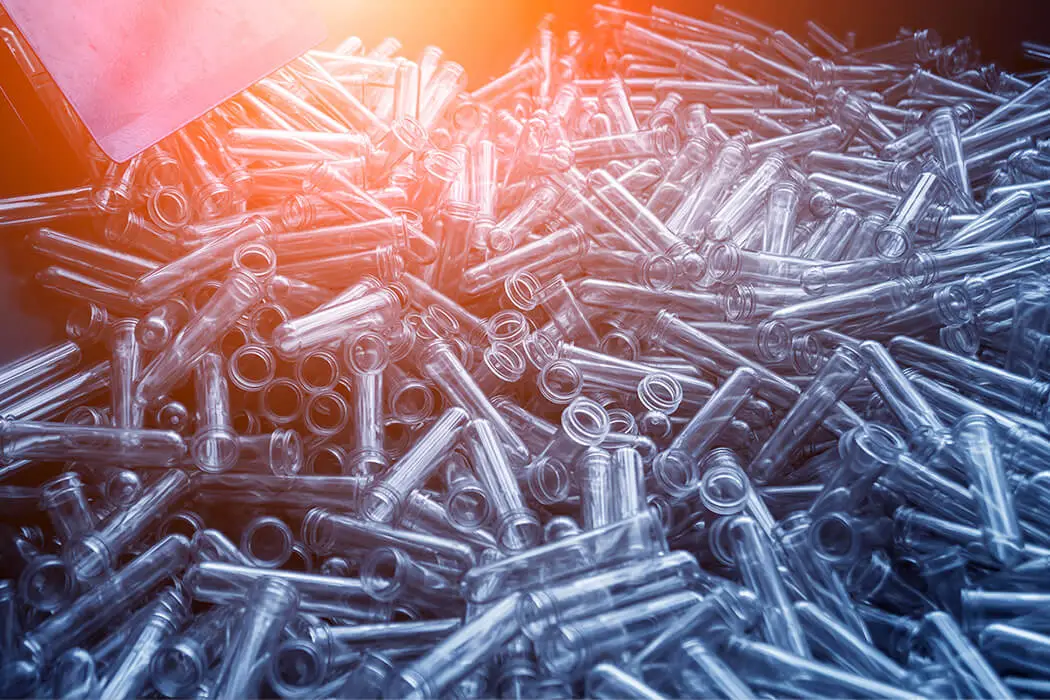
PET preforms made from recycled PET (rPET) are becoming increasingly popular as companies seek to reduce their environmental impact and promote sustainability. Additionally, recent…

Hot-filling (Hot-fill) technology is a widely used method of bottling beverages, particularly those intended to be served at ambient or room temperature. This process…
Every bottle filling project has its own technical requirements. Bottle shape, material, fill volume, hygiene standards and required output all influence the machine configuration. If you’re planning a new bottling line or upgrading an existing one, our engineers will help you select the right equipment and configure a bottle filling solution that matches your product and production requirements.