Automatic rotary Rinsing-Filling-Capping monobloc system for liquid and viscous products in PET or glass bottles

DESCRIPTION

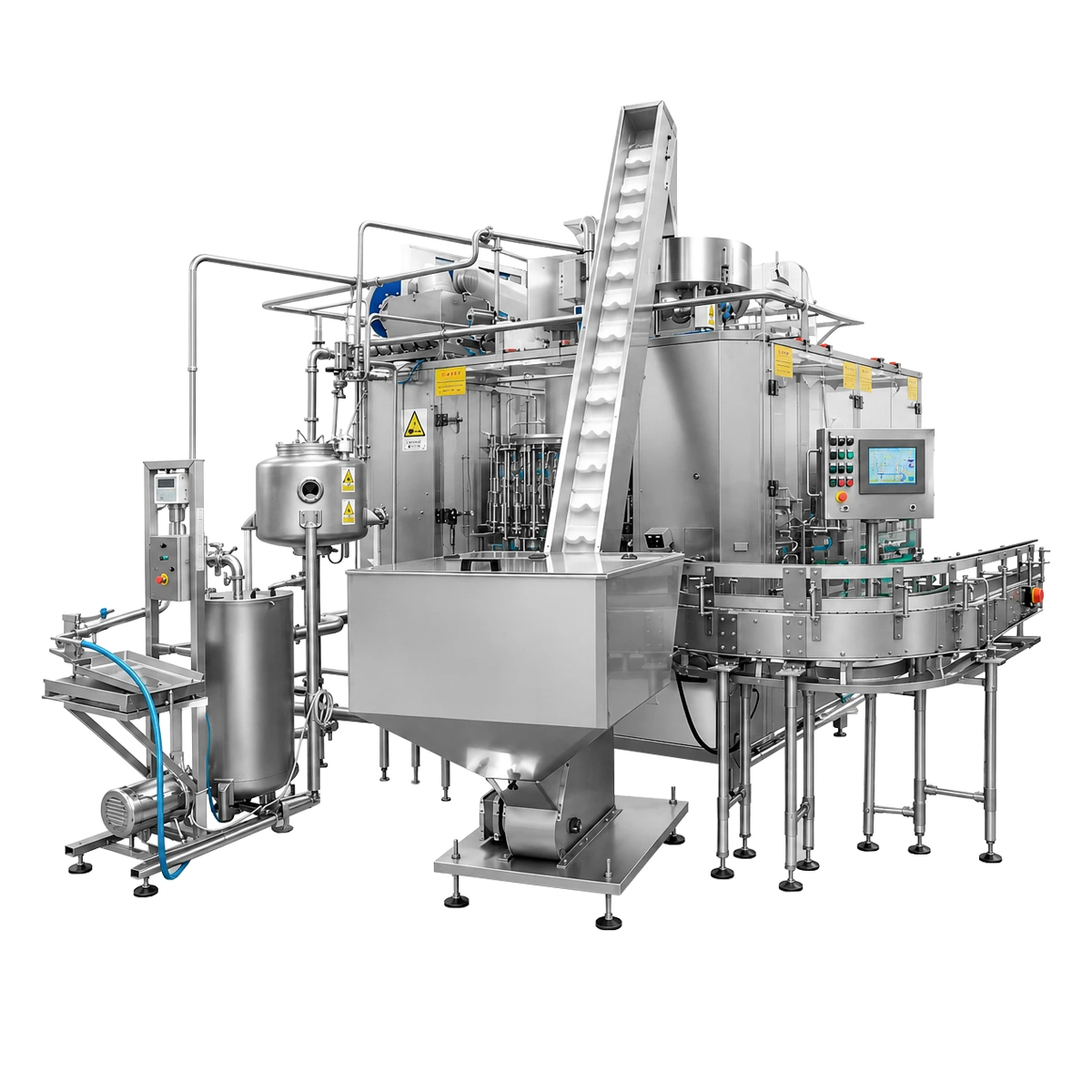
The RFCT is an automatic rotary rinse-fill-cap monobloc designed for filling still liquid and semi-viscous products into PET and glass bottles. It combines bottle rinsing, filling and capping in a single machine and can be configured for different production capacities, bottle formats and filling requirements.

The RFCT is suitable for still beverages and liquid food products including milk, drinking yoghurt, kefir, juice, flavoured milk, iced tea and edible oils. Depending on the product characteristics and filling requirements, the machine can be equipped with flow meter, net weight or overflow filling systems.

The RFCT is available with 9–60 filling valves and 3–20 capping heads, allowing the machine configuration to be matched to the required production capacity. Hot-fill configurations are also available for suitable products such as juices and iced tea, with the machine materials and components selected for the required filling temperature.

TECHNICAL SPECIFICATIONS

Packaging type Bottle
Product Liquid and viscous products (food or non-food applications)
Filling volume 250–1,000 ml
Bottle material PET, Glass
Filling technology Flow meter, net weight or overflow filling
Number of filling valves 9–60
Number of capping heads 3–20
Capping type Plastic screw caps, press-on plastic caps, roll-on metal screw caps
Speed*, max. Up to 20,000 bottles/hour
Product-contact parts material Stainless steel AISI 316
Main machine frame material Stainless steel AISI 304

*Production speed depends on the filling volume, product characteristics, bottle dimensions, and the quality and consistency of the packaging materials.

OPERATING PRINCIPLE

The RFCT operates as a continuous rotary rinse-fill-cap system with three synchronised indexing turrets for bottle rinsing, filling and capping. The three turrets rotate continuously and transfer bottles sequentially from one processing section to the next while maintaining a synchronised production flow.

Empty bottles first enter the rinsing turret, where they are rinsed using the configured rinsing system. They are then transferred to the filling turret, where the selected dosing system delivers the required product quantity. Flow meter, net weight or overflow filling can be selected according to the application.

After filling, the bottles are transferred to the capping turret. Caps are automatically fed and oriented before being applied using the selected capping system. The filled and capped bottles are then transferred to the outfeed conveyor for further handling, inspection or secondary packaging.

The three rotary sections remain synchronised throughout the production cycle, maintaining the correct bottle transfer between rinsing, filling and capping. The machine is controlled automatically through the PLC and HMI, with sensors and process feedback used to monitor the main operating parameters. The filling and product-contact system can be configured for CIP cleaning according to the machine configuration.

OPERATOR RESPONSIBILITIES

The RFCT has been engineered for fully automatic operation, requiring only limited operator intervention throughout the production cycle. The operator’s principal role is to monitor machine performance, replenish supplies, and carry out routine quality and cleaning checks in accordance with standard operating procedure. Typical operator duties comprise the following:

  • Monitoring machine status, operating parameters and alarms via the touchscreen HMI.
  • Maintaining a continuous supply of empty bottles to the machine.
  • Monitoring the supply and quality of prepared rinsing water.
  • Monitoring the product supply and balance tank level during production.
  • Replenishing the cap feeding system to maintain a continuous supply of caps to the capping section.
  • Checking filling performance, cap application and overall product quality through routine production checks.
  • Removing incorrectly filled, incorrectly capped or rejected bottles, where applicable.
  • Performing routine cleaning, sanitisation and format changeovers in accordance with site SOPs and the production schedule.

TYPICAL APPLICATIONS

The RFCT is designed for liquid and semi-viscous food products filled into PET and glass bottles. Its main applications are dairy products, still beverages and edible oils, with configurations available for different bottle formats and production capacities.

PRODUCT APPLICATIONS

INDUSTRY TYPICAL PRODUCTS
Dairy Milk, Drinking Yoghurt, Kefir, Ayran, Flavoured Milk
Juices & Still Beverages Still Water, Fruit Juice, Juice Drinks, Iced Tea, Lemonade, Smoothies
Edible Oils Sunflower Oil, Rapeseed Oil, Olive Oil, Soybean Oil, Avocado Oil

FILLING TECHNOLOGIES

The RFCT can be configured with different filling systems according to the product characteristics, filling volume and required dosing method. The available filling technologies include flow meter, net weight and overflow filling. Hot-fill is available as a separate machine configuration for suitable products.

FILLING TECHNOLOGY SELECTION

FILLING SYSTEM PRINCIPLE & APPLICATION
Flow Meter Filling Measures the volume of product passing through the filling line and controls the filling cycle to deliver the preset quantity. It is suited to free-flowing liquid products with stable flow characteristics that can be accurately measured by the selected flow meter, including suitable juices and other still beverages.
Net Weight Filling Uses load cells to measure the actual product weight during filling and controls the filling cycle until the preset target is reached. This system is suitable where direct weight measurement is preferred, including edible oils and selected dairy products such as yoghurt and kefir.
Overflow Filling Fills each bottle to a defined liquid level, with excess product returned through the overflow system once the required level is reached. This method is suitable for free-flowing liquids where a consistent fill level is important and can also be used for products that tend to foam during filling.
Hot-Fill Configuration Hot-fill is a machine configuration rather than a separate filling technology. The RFCT can be prepared for suitable products such as juices and iced tea, with product-contact materials, seals and other components selected for the required filling temperature.

CONFIGURATION OPTIONS

The RFCT can be configured according to the product, bottle format and production requirements. Optional equipment covers product supply, filling and rinsing systems, bottle handling, hygiene, coding and integration with upstream and downstream packaging equipment.

OPTIONAL MODULES

EQUIPMENT DESCRIPTION
Product Feed Pump Automatically transfers product to the balance tank. Pump type is selected according to the product characteristics and required flow rate, such as a sanitary centrifugal or lobe pump.
Filling System for Products with Particles Modified filling system with enlarged product passages for products containing fruit pieces and other food particles.
Heated Balance Tank Maintains the required product temperature during filling of hot-filled or temperature-sensitive products.
Bottle Unscrambler Automatically orients and feeds empty bottles onto the infeed conveyor, reducing the need for manual bottle loading.
Ozone Station with Ozone Generator Provides ozonated water for the bottle rinsing unit. The system generates and supplies ozone-treated rinsing water to the rinsing section, where it is used to treat the internal surfaces of empty bottles before filling. Ozone acts as an antimicrobial agent, helping to inactivate microorganisms on the bottle surface during rinsing.
Inkjet/Laser Date Coding Prints production dates, expiry dates, batch numbers and other variable information directly onto the finished bottle.
Extended Infeed and Outfeed Conveyor Provides additional conveyor length for bottle accumulation and integration with upstream or downstream packaging equipment.
Outfeed Rotary Collection Table Accumulates finished bottles for manual collection or transfer to secondary packaging operations.
Stand-Alone CIP Unit Provides automatic cleaning of the complete product path using pre-programmed Cleaning-in-Place (CIP) cycles.
Ultra-Clean Configuration Provides a controlled air environment around the filling area using HEPA filtration and positive air pressure to reduce the risk of contamination during filling.
Contact experts for your packaging or filling project support

Request a Quotation