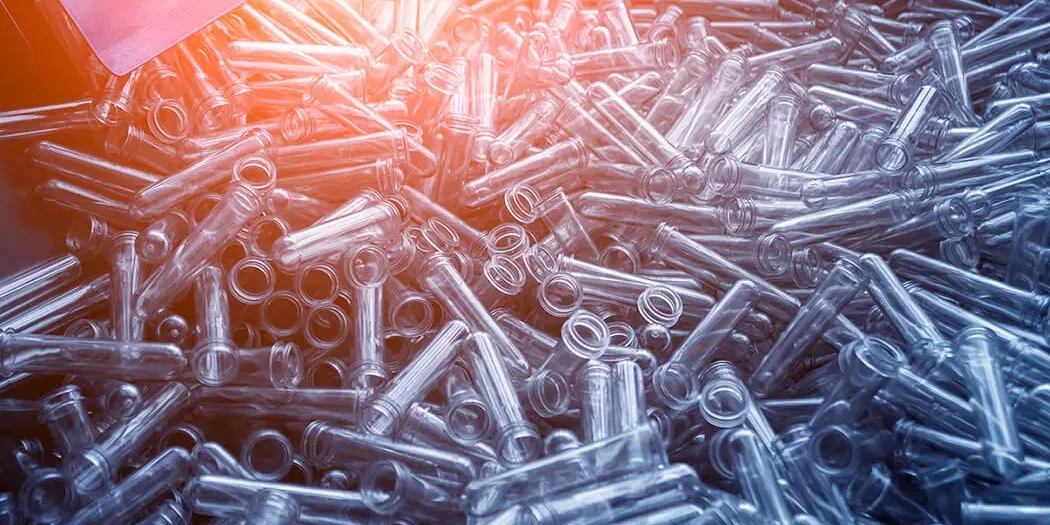
PET preforms made from recycled PET (rPET) are becoming increasingly popular as companies seek to reduce their environmental impact and promote sustainability. Additionally, recent regulations in different countries affect using rPET in PET preforms.
Recycling regulations
One of the most significant regulations has come from the European Union, which has set a target for member states to collect 90% of plastic bottles for recycling by 2029 and require that all PET bottles contain at least 25% rPET by 2025. In April 2022, the UK Government implemented the Plastic Packaging Tax to reach 30% recycled content in all plastic packaging. In the United States, the Recycle Act aims to improve recycling infrastructure and increase the use of rPET in PET packaging.
Benefits of rPET
Along with environmental sustainability, using rPET in PET preforms offers several additional benefits. rPET is a lower-cost material than virgin PET, making it attractive for businesses looking to reduce manufacturing costs. Additionally, recycled PET has similar physical properties to virgin PET, making it a reliable and safe food and beverage packaging material.
rPET challenges
It is important to consider some challenges associated with using rPET. For example, the quality and availability of recycled PET vary widely, impacting the consistency and reliability of preforms production. Using rPET requires decontamination, which complicates the manufacturing process.
Recycling cost is also an essential factor to consider. While the cost of producing rPET from recycled plastic is generally lower than virgin PET, collecting and sorting recyclable materials can be significant. Recycled PET cost depends on the material availability and quality.
Recycling process
The recycling process for PET preforms made of recycled PET starts with shredding the PET waste into small pieces. The next stage is cleaning and washing shredded granules and finally melting and reforming the material into preforms. As a result, using rPET in PET preforms helps reduce plastic waste in landfills and oceans.
In conclusion, using rPET in PET preforms is a growing trend in the packaging industry. Recent regulations in different countries promote the use of rPET, and many companies are adopting rPET as part of their sustainability initiatives. While there are challenges associated with using rPET, environmental sustainability benefits make it an attractive option for food and beverage manufacturers. As the demand for rPET in PET preforms continues to grow, the industry will likely continue to innovate and overcome the challenges associated with this material.