DESCRIPTION
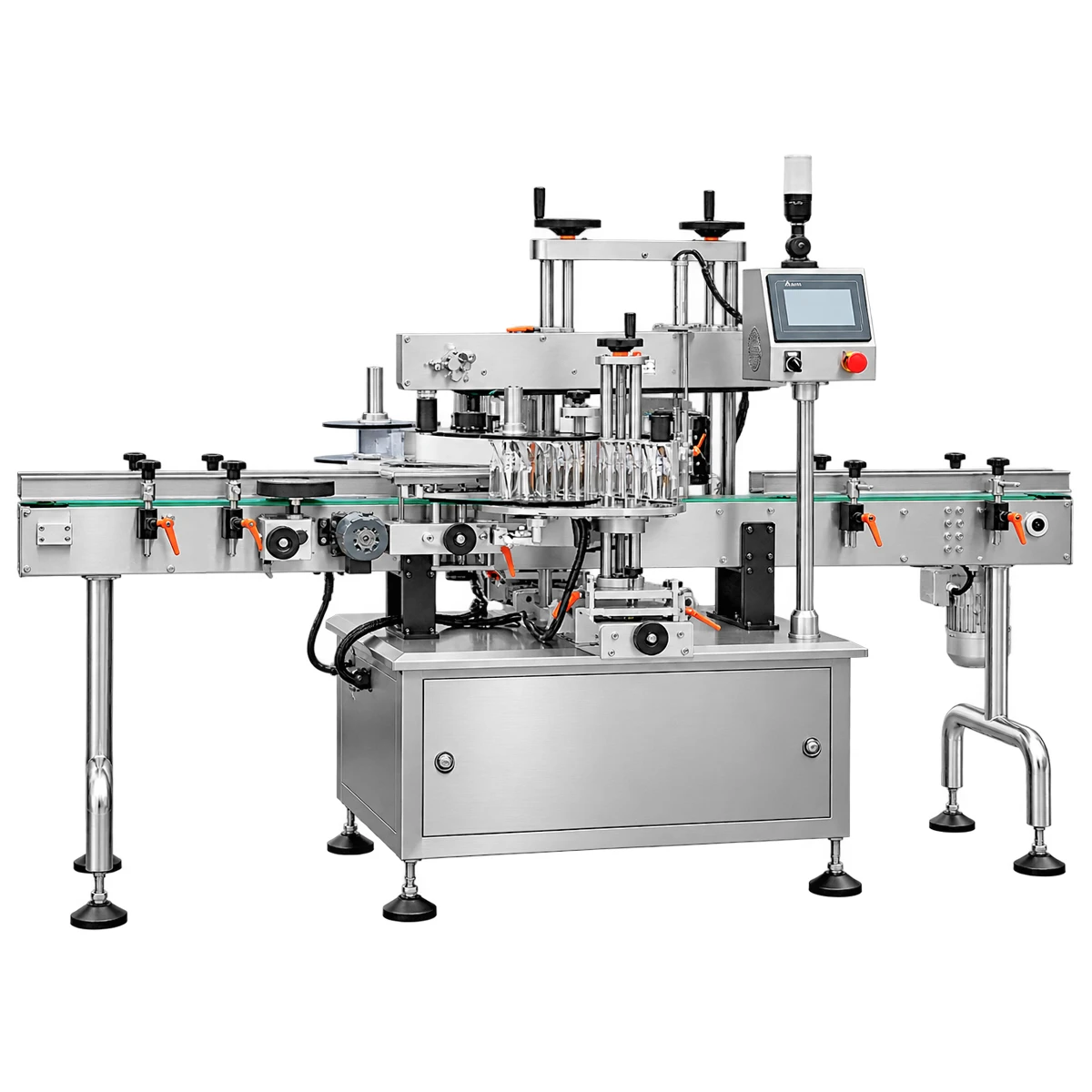
The SALM-2F applies self-adhesive pressure-sensitive labels to round, oval, square and flat-sided bottles, jars, cans and other containers. It labels the front and back in one pass, and can run in single-side mode where only one label is needed. Typical applications include food, beverage, cosmetic, pharmaceutical and household chemical products, at speeds of up to 6,000 pieces per hour.
Container dimensions and label sizes can vary within the range given in the specifications. Maximum output depends on container dimensions, label size and application requirements.
To change format, the operator adjusts the guides, repositions the applicators and updates the parameters on the human-machine interface (HMI). The machine runs as a standalone labelling machine or as part of a complete packaging line.
OPERATING PRINCIPLE
Containers enter the labelling station on the motorised conveyor and move towards the applicators. A product sensor detects each container as it approaches the application point and starts the label dispensing cycle. Depending on the selected operating mode, one or two applicators dispense labels from the release liner and apply them to the container surface.
In front-and-back mode, both applicators label opposite sides of the container during the same pass through the machine. A pressure belt and support system hold the labels against the container surface, which keeps adhesion and label position consistent.
Final label position depends on container dimensions, shape, surface condition and product spacing. Consistent product transfer through the labelling section matters most when the process requires accurate label orientation and placement.
CONFIGURATION OPTIONS
Optional equipment extends the standard machine specification where the packaging, container format or line configuration requires it. The available options support product identification, line integration and container handling before and after the labelling process.
The final configuration depends on the packaging specification, production requirements and the overall line layout.